
People around the world are being strongly encouraged to be socially distant from one another and self isolate at home whenever possible. But how are we doing so far? Are people really staying at home most of the time or are they getting a failing grade?
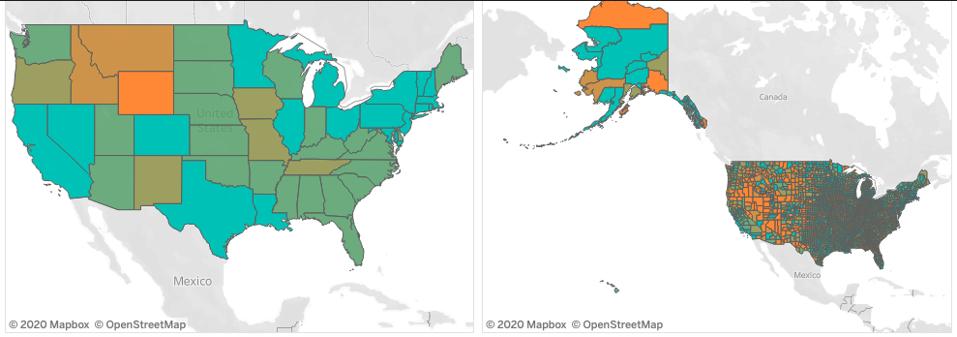
Unacast, which is a company that analyzes phone GPS data, has released what it calls a Social Distancing Scoreboard that shows how each state is doing. [1] This information will help health officials determine where more strict measures may be required.
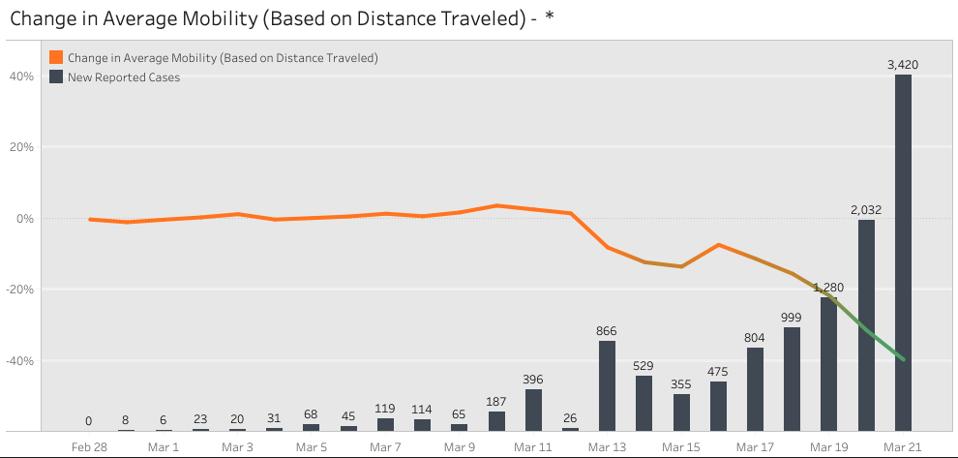
The company was able to determine, county-by-county, which communities were doing better with social distancing and which ones are not based on comparing post-pandemic movement with pre-pandemic movement. States that are doing well are colored in green. States that are not are colored in orange.
According to Unacast’s data analysis of GPS movement, Alaska, Nevada, New Jersey, Rhode Island, and Washington DC have been the best about staying socially distant. Idaho, Montana, Wyoming, New Mexico, and Oregon, however, need quite a bit of improvement.

Right now, social distancing is one of the most important things you can do to slow and ideally halt the spread of novel coronavirus, the virus which has caused over half a million cases of COVID-19 around the world. Social distancing involves staying at home and when in public, maintaining a distance of a least six feet from the people around you. Shelter-in-place orders and social distancing measures are intended to help ‘flatten the curve’ of cases.
Read: Opinion: Are You Young and unafraid of the coronavirus? Great, Now stop killing people.
Flattening the curve
The term ‘flatten the curve’ is getting thrown around a lot lately, but what does it mean? The reality is that until a cure or a vaccine is found for the novel coronavirus, hundreds of thousands of cases of COVID-19 will happen. But they don’t have to happen all at once, and flattening the curve can help prevent our healthcare systems from being overloaded with patients needing care. [2]
This graphic helps visualize the two possible curves – one with distancing measures in place and one without.

As you can clearly see, the curve we see with no social distancing measures greatly exceeds our healthcare system’s capacity. The curve with protective measures in place manages to stay just below the system’s capacity, meaning that all COVID-19 patients will be able to get the care they need without having to ration life-saving medical equipment.
By participating in social distancing and adhering to curfews and shelter-in-place orders put in place by authorities, we can reduce the number of people needing medical attention at any given moment, allowing better, more comprehensive care to be given.
Keep Reading: I’m one of 4 percent that coronavirus might kill. What you do today could save my life
- https://www.unacast.com/covid19
- https://www.livescience.com/coronavirus-flatten-the-curve.html
The post Cell Phone Data Shows Which U.S. States Are Social Distancing And Which Aren’t appeared first on The Hearty Soul.